

How Students Earn Currency
Academic Performance
Ways to earn:
- Complete homework assignments
- Score well on tests and quizzes
- Participate actively in class
- Finish projects on time
- Show improvement over time
Positive Behavior
Ways to earn:
- Follow classroom rules
- Help other students
- Show good sportsmanship
- Demonstrate leadership
- Exhibit kindness and respect
Classroom Jobs
Ways to earn:
- Assigned paid jobs
- Automatic weekly payments
- Performance bonuses
- Consistent responsibility
Achievement Badges
Ways to earn:
- Reach savings milestones
- Complete job streaks
- Lifetime earning goals
- Special achievements
How Students Spend Currency
Shopping for Rewards
Participating in Auctions
Budgeting Tips for Students
The 50/30/20 Rule
The 50/30/20 Rule
Help students divide their earnings:
- 50%: Save for big goals
- 30%: Spend on medium rewards
- 20%: Fun small purchases
Set Savings Goals
Set Savings Goals
Encourage students to:
- Pick a reward they really want
- Check the price
- Calculate how long to save
- Track progress toward goal
- Resist impulse purchases
Track Spending Patterns
Track Spending Patterns
Students can review their transaction history to:
- See where currency goes
- Identify impulse purchases
- Find areas to save
- Celebrate earning milestones
Don't Keep Zero Balance
Don't Keep Zero Balance
Saving is good, but hoarding isn’t fun!Encourage students to:
- Enjoy some small rewards
- Participate in class economy
- Balance saving with spending
- Remember the goal is learning AND fun
Earning Strategies for Students
Consistency Wins
Do this every day:
- Complete all homework
- Participate in class
- Help classmates
- Follow rules
Go Above and Beyond
Bonus opportunities:
- Volunteer for extra tasks
- Lead group projects
- Mentor struggling peers
- Exceptional work quality
Apply for Jobs
Regular income:
- Request classroom jobs
- Automatic weekly payments
- Build resume of responsibilities
- Steady earning source
Pursue Badges
Achievement bonuses:
- Work toward badge criteria
- Earn bonus points with badges
- Multiple tiers to pursue
- Long-term motivation
Smart Spending Decisions
When to Buy vs Save
- Buy Now When...
- Save When...
- You’ve saved enough for big goal already
- Small reward would make you happy today
- End of school year approaching
- Reward might run out (limited quantity)
Auction Bidding Strategy
Set Your Maximum
Set Your Maximum
Before auction:
- Decide highest amount you’ll bid
- Stick to your limit
- Don’t get caught up in bidding war emotions
Wait to Bid
Wait to Bid
- Don’t bid immediately when auction opens
- Wait until closer to end
- See what others are willing to pay
- Bid just enough to win
Know When to Walk Away
Know When to Walk Away
- If bidding exceeds your max, stop
- Save currency for next auction
- Don’t blow entire balance on one item
- Many auctions = many chances to win
Bid on Multiple Auctions
Bid on Multiple Auctions
- Spread bids across several auctions
- Increases chances of winning something
- More fun than all-or-nothing approach
- Teaches diversification
Understanding Your Balance
Balance Components
When you bid on auctions or move money to savings, your balance is split into pieces:Currency you can spend right now on rewards or auction bids.
Amount currently held by your highest bid in an active auction. If you’re outbid, this returns to your spending balance automatically.
Money you’ve moved into your savings account. It’s protected from impulse spending and can be moved back any time.
Your spending balance is what you can actually use — reserved bids and savings don’t count toward it.
Transaction History
Students can view:- Every point earned (with reason)
- Every purchase made
- Job payment dates
- Badge bonuses received
- Balance after each transaction
Common Questions from Students
Why did my balance decrease?
Why did my balance decrease?
Possible reasons:
- You purchased a reward
- You won an auction (congratulations!)
- Teacher applied a fine for rule violation
- Spent reserved funds from losing auction bid
When do I get paid for my classroom job?
When do I get paid for my classroom job?
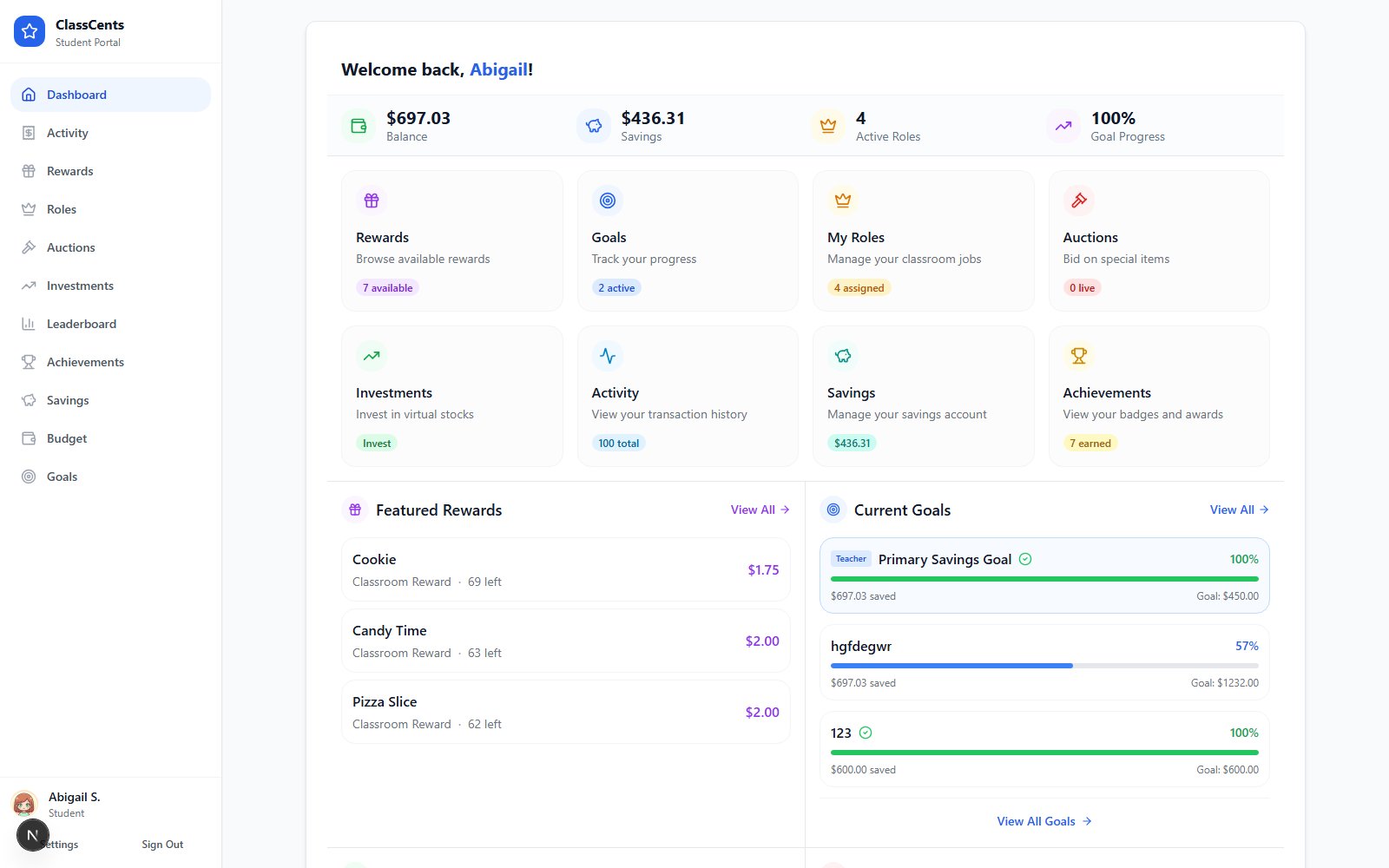
Check your job card on the dashboard - it shows:
- Your assigned job
- Payment frequency (daily/weekly/monthly)
- Next payment date
Can I cancel a purchase?
Can I cancel a purchase?
No - sales are final once confirmed!This teaches:
- Think before you buy
- Make deliberate decisions
- Live with choice consequences
Why can't I buy this reward?
Why can't I buy this reward?
Possible reasons:
- Not enough currency (check price vs your balance)
- Reward is temporarily unavailable
- Reward is auction-only (can’t buy, must bid)
- Quantity limit reached
How do I earn more points?
How do I earn more points?
Best ways to increase earnings:
- Complete all homework consistently
- Participate actively in class
- Help classmates who are struggling
- Apply for classroom jobs
- Ask teacher about earning opportunities
- Work toward achievement badges
Teaching Moments
Help students learn valuable life skills:Delayed Gratification: Saving for big rewards teaches patience and planning
Opportunity Cost: Spending on one thing means can’t afford another - choices matter!
Budgeting: Planning purchases and tracking spending build financial literacy
Risk Assessment: Auction bidding teaches evaluating risk vs reward
Goal Setting: Working toward specific rewards develops goal-oriented mindset
Related Topics
Student Dashboard
Learn about all dashboard features
Rewards System
Understand how the rewards shop works
Auctions
Learn auction bidding strategies